


New car discounts rise to highest in a decade - the complex story
- MilesDriven
- Feb 11
- 11 min read
The massive increase in list prices is being combatted by heavy new car discounting at dealers creating a bonanza in reducing prices but a confusing arena for new buyers.

New car sales are rising but the story behind the sales is heavy discounting on new cars that is widely being viewed as unsustainable. There will be little sympathy from consumers that are walking into car dealers and finding price increases over the past 5 years to be an inflation busting 30% in some cases. Car prices are simply too high for most consumers in the markets that manufacturers must perform well in if they have any hope of turning a profit. Behind the price rises are a never ending list of headwinds and while government policy, especially in the UK, is a major factor, there has been poor accountability by manufacturers to be bold instead of all desperately trying to feed demand for the small/mid SUV market. Then there is cost of everything, from the electricity to make car plants work to the raw materials, and a final punch in the nose there has been an almost unbelievable increase in Chinese cars. We'll break down each issue in a moment, but if there is anything weighing heavy on new car discounts, it has to be consumers appetite to buy, but not at the prices they are suggesting.
An industry insider advising one of the new car entrants told TMD that 'the middle ground is gone, luxury and performance (cars) will be safe for some time, but the rest have a near impossible task against manufacturers happy to lose money for as long as it takes to get market dominance - and to be honest, they have thick margins in western countries thanks to very cheap labour at home'.
Let’s first talk about government policy. Holding no punches, any country that says it is serious about job security and the environment couldn’t do much worse. In the EU there is a slow but deafening acceptance that it is better to have a slow but definite transition in personal transport emissions reduction than the old policy. The move to delay a ban on petrol and diesel will go a long way to having engineers find better answers to providing affordable cars that use less fuel and emit less CO2. It will also bring enough confidence to stop layoffs and shore up demand for not just existing jobs, but future ones. All that while seeing how EV and hybrid cars can meet the market that it is currently missing is a reasonable step, on the other hand there is the UK. For any employer of thousands of jobs to say they may seriously have to consider leaving should have been enough to terrify ministers into action. It wasn’t. For manufacturers to seriously consider a market exit like Fiat and Peugeot should have struck a chord. It didn’t. These manufacturers don’t build cars in the UK, but the market has been a key exporter for decades. You’d imagine there would at least be a rethink. There wasn’t. For car manufacturers to throw all the profit out the window, offering discounts to sell cars at a loss, and then say that even with government incentives it wouldn’t be possible to hit the fairytale targets ministers had dreamt up without basing the timelines on anything but a finger in the wind should have caused urgent action. It did not. Instead the government stripped the grant scheme. It’s akin to a farmer explaining that they can’t produce more wheat without a bigger field and the government’s answer being to take away some of their land. While EVs do well in testing and magazine reviews (TMD and sister Electrically Driven have tested several) and continue to come down in price, it doesn’t mean consumers will buy them. It isn’t worth mentioning mining or other environmental impacts, all cars impact our planet, some more than others, and we are a long way past agreeing reducing the average damage is better than trying to kick the ones we don’t like into submission.
Of the many EVs I’ve tested all were capable vehicles that were perfectly livable if you can charge at home. That ignores 60% of the population and testing a car and finding it well made doesn’t help residual values when everyone is still terrified of batteries they don’t understand. The answer was actually simple, government schemes supported EV battery pack warranty claims up to 12 years. Take the money they were giving to discount the new price and offer that as help if a battery pack failed for the 4th owner who was already struggling to pay their heating bill and has no choice but to run a 10 year old car (a worryingly growing proportion of the population but that’s an economic essay on its own). Then remove the target to ban petrol/diesel cars, instead keep going with a fleet average reduction. This would not only give time, but would see real reduction in emissions as people holding on to their old car buy something cleaner. Even if it took 40 more years, better to actually reach a target than constantly say ‘we’re optimists’ as the walls burn down around you. The data on that one is clear, the average age of cars being driven on the road is older than ever, some of this is the state of the economy, the rest is people simply not willing to leave what they know for something they feel they may regret. Lastly, new safety laws have made cars become so complicated and tech laden that consumers are finding reliability is going backwards. Sensors getting confused, mandated steering intervention, speed warnings, camera systems. All loaded with new engine management systems to stop hackers. I’m surprised my current test vehicle doesn’t warn me my coffee is the wrong temperature. Politics has got bogged down when it comes to cars, it would have taken leadership and a backbone to tell a noisy room to shut up and listen. Laying down a roadmap for less emissions, lower costs, job security, and government support, resulting in market confidence, sadly anyone with power seems to hide under their desk so they don’t have to witness the car crash that is the new car market for consumers.

Governments are not the only ones to blame though. Car manufacturers seem to have forgotten that no one asked for an SUV before they saw one, neither did they ask for roadsters, or wagons. Certainly, no one asked Ferrari to build a car before Enzo put his racing machines on track and then begrudgingly made road cars. Today every manufacturer makes a small to midsize SUV, some make three near identical sized cars. Few are brave enough to admit the market is saturated and while consumers have voted with their wallet, it was not them that asked for the Kia Sportage or Volkswagen Tiguan. Before that these same consumers drove hatchbacks and sedans, and if something could be made tempting, at least some people would give up their lump on wheels and find just as much space, more efficiency, and better pricing in a car the size they actually need. It is easy to blame consumers, however it doesn't take much of a search to see almost everyone has given up offering an alternative. One of the popular estate cars of the 2000's and 2010's was the VW Passat. A solid family car that had space for the dog, the pram, the shopping and the kids, all while offering reasonable running costs for parents. Today, it's a sideshow. Every single Passat on sale in the UK attracts luxury car tax. This middle of the road family car starts at just over £40,000. Meanwhile the VW Tiguan, starts at just over £38,000. Having seen the inside of a basic Passat there is nothing to justify that price tag, want the hybrid in a nice specification? That's £50,650. For those of you that haven't fallen off your chair, the new price of the 2.0TDI Passat in sporty R-Line trim in 2009 was £17,034 OTR. Go wild and add the most expensive paint, winter pack, and lots of trimming to impress your mates, you still would have spent less than £20,000. VW can fairly claim it costs more to build a car 17 years later, but triple, no. Even looking at the new 1.5 petrol engine, so no 'expensive' battery pack, is just over £45,000. I want to also pick on Kia here as VW are far from the worst offender. Some of you will remember years ago a TopGear feature called 'Star in a Reasonably Priced Car'. The Kia Cee'd was one of such cars, and starting at £11,015 in 2010, you can understand why. Today, you can only buy the lifted crossover style XCeed, starting at £25,215. So much for reasonably priced, as you'll be at nearly £30,000 if you want anything but the base spec. It's easy to say manufacturers have got their pricing wrong. They may need to accept they've got their lineup wrong too, the growing market of people driving older and older cars couldn't make the data clearer, people need cars, they don't have the money you are asking, build something they can afford.

Rising costs though are something we can sympathise with the industry on. The price increases for basic utilities look like a bad joke for households, imagine running a factory. Everything from water, to electricity, to basic materials aside from sheet metal have gone up. No wonder car manufacturers offer us big cars, it's the cheapest thing they can do with the bodywork barely moving the needle in cost from a hatchback to an SUV. Here is obvious profiteering and again policy so weak a toddler could smash through it. However, there is a much larger aspect, commodities trading, along with shareholder pressure, has created a wild market run. It's beyond the scope of car pricing to go into these, but as more precious materials are needed to build cars and decade long supply lines were broken down and trampled on as everyone tries to profit from materials it is no wonder the inflationary effect has hit car production. It doesn't let manufacturers entirely off the hook, but it does show that while steel has been propped up for national security across nations, other critical materials have been left to inflate out of control. As most know, if you want to weaken a country, start with the economy, this seems to be something our leaders know when applying it to others in the forms of sanctions and tariffs, but miss when it plays against the companies that operate within their borders. What's worse, in many recent cases the cost to build a car is ever rising not because of raw materials, manufacturers have shored up their supply lines, but in the very power needed to get the job done. That was well within the control of regulators and law makers, all clearly asleep at the wheel, something they probably are OK with as they make laws for driverless cars rather than finding time to financially encourage lower priced and efficient new cars.
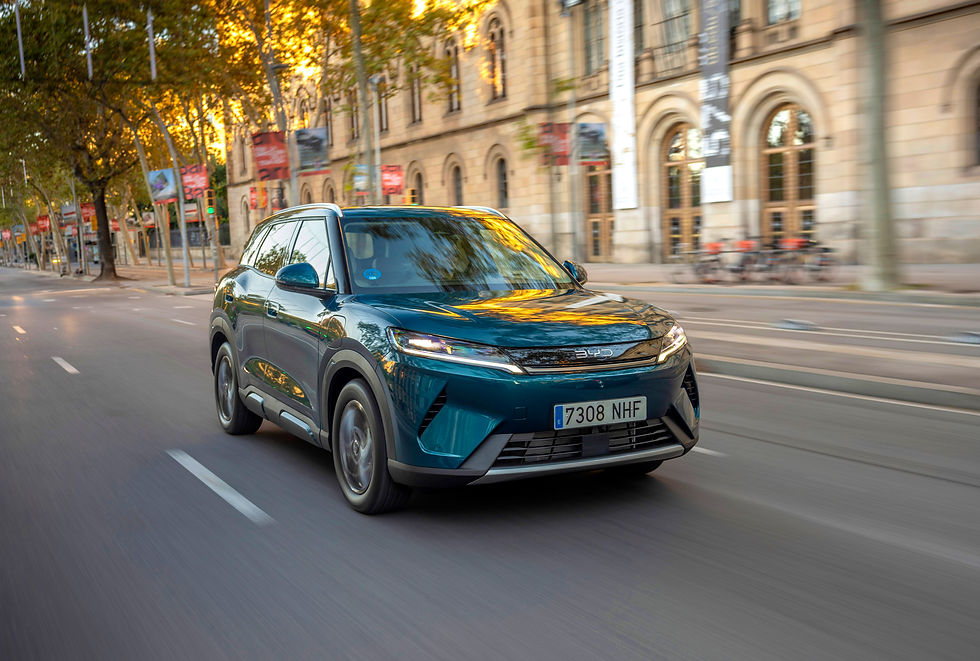
Then there is the new wave of car manufacturers. The first reaction is to question everything. Quality? Price? Reliability? The truth is that while healthy scepticism of any new car is needed to fairly judge it, the mass increase of Chinese cars is probably one of the main reasons consumers can afford cars from anyone, not just China. This is partly because several Chinese car giants have poached the best minds from Europe and America and built up a workforce far larger than any other. The latest crop of Chinese cars have made the leap it took Korea's best two decades to master - China has done that in three years. Today for an average car buyer the Chinese car options are not just tempting on paper, but from behind the wheel. Look at brands like Dacia, Skoda, Kia, and Cupra. All taking a slightly different angle on providing a car for the middle ground consumer. All currently discounting their cars to make them competitive. Cupra is quite alarming. The brand's latest electric SUV has only been on the market for six months, usually that would mean the only deal would be free floor mats. Today though you can easily find £10,000 off, or even more. The fact is Jaecoo and BYD will beat whatever Cupra are offering, and while the Cupra name has been around for a while (thanks to the SEAT connection) it doesn't have the brand power of VW or Ford. Both of whom are also offering discounts to tempt in buyers who are walking in to a new showroom with a name they can't pronounce nailed to the front door. There was some arrogance to the market in 2018, car manufacturers were talking about ditching entry models, everyone wanted to move up. On a press shoot with Dacia the media guy told me that they were focusing on value now, not cheap. When everyone thinks they will move up, some move down. Ford's self inflicted wound to stop selling cars apart from the Mustang and only focus on SUVs and trucks may have seemed sensible in America, in Europe it is a calamity. They've gone toe to toe with not only the best Europe has to offer but are fighting on both fronts as the Chinese wave of cars hammers them on the one area they always dominated, value for money. Vauxhall limp on ahead after being let go from GM and becoming rebadged Peugeots, and the Corsa proves Ford were wrong to ditch the Fiesta. However, you can't blame them entirely for this misstep when governments made it clear that EVs were all they were interested in.
Should we be thanking the Chinese? No. Should we be taking their cars seriously? Yes. That means brands that want to survive should realise how laughable it is to launch a £50,000 car in the UK that can't at least claim to come with a badge that has sweat equity in the name for being a Premium or Luxury product. BMW, Mercedes, Lexus, Land Rover, Audi, Porsche, and the many other luxury or performance brands will be safe for now. In fact several of these brands are seeing record demand. Land Rover simply can't build their Range Rover models priced in six figures fast enough at the moment. For the majority though, if car companies want to stay alive while selling to the masses, they will need products that aren't priced out of people's hands, and while they are there, they'll need to wow the average buyers with more than just another middle of the road SUV.

Interestingly, while the figures make the death of diesel clear, there does still seem to be a market. Odd isn't it, after all that has been discussed. Surely anyone selling a diesel has to deal with an angry protester every five minutes, or perhaps not. Consider for a moment, that 1 in 10 cars sold in the UK were solely diesel powered, at a time when almost no one offers diesel PHEV or even self-charging hybrids, plus most manufacturers ripped them from the line-up five years ago. It seems the public still want to buy diesel cars. The incentive to buy/lease a diesel car is non-existent, and as a company car subject to BIK it's close to financially irresponsible to pick diesel over PHEV. So the 1 in 10 new car buyer that wants diesel must be just regular people walking into dealerships, choosing to spend their money on diesel over every other option that is pushed in their face. It's like going to see the foreign language film at the local cinema. All five new Hollywood blockbusters are plastered everywhere and a dancing mascot outside is pointing you to the screens to see the films that offer a discount on popcorn when you buy a family ticket. Meanwhile you've walked past them all to a dark corner and sticky floor and sat in a seat that someone has etched '2010 woz here' into the back rest, you reach for a rather sad looking half packet of Rolos from your front pocket and wait for the roll call as a French man begins a dialogue that you are speed reading to catch up, someone has stolen his wife, his croissant, and his Peugeot, and he wants justice. You couldn't be happier with your choice, and that's probably because you have a diesel VW Passat parked outside.

Nice fuel drain